
Single amino acid scanning of an anti-HER2 nanobody paratope, all 92 variants on one chip. Cook et al., bioRxiv (April 2025).
Our third SPOC paper was posted on bioRxiv (Cook et al., 2025, preprint) and extends the platform to single-chain antibodies (scFv, VHH) and Fabs. The paper reports a 92-variant mutational scan of an anti-HER2 nanobody paratope screened on one SPR biosensor, with KD values measured for every variant against recombinant HER2 ECD. It also reports affinity values for three constructs, including a TNFα VHH measured at 149 pM, and demonstrates epitope binning using both purified therapeutic antibodies and crude IVTT lysate.
Background
For antibody discovery and affinity maturation, the bottleneck is rarely sequence design. AI models can produce millions of candidate binders in a single design run. The slowdown is in producing and biophysically characterizing those candidates. Standard recombinant production costs limit deep kinetic screening to a few dozen leads per campaign, and ultra-high-throughput methods like phage and yeast display return enrichment scores rather than ka, kd, KD, and t1/2.
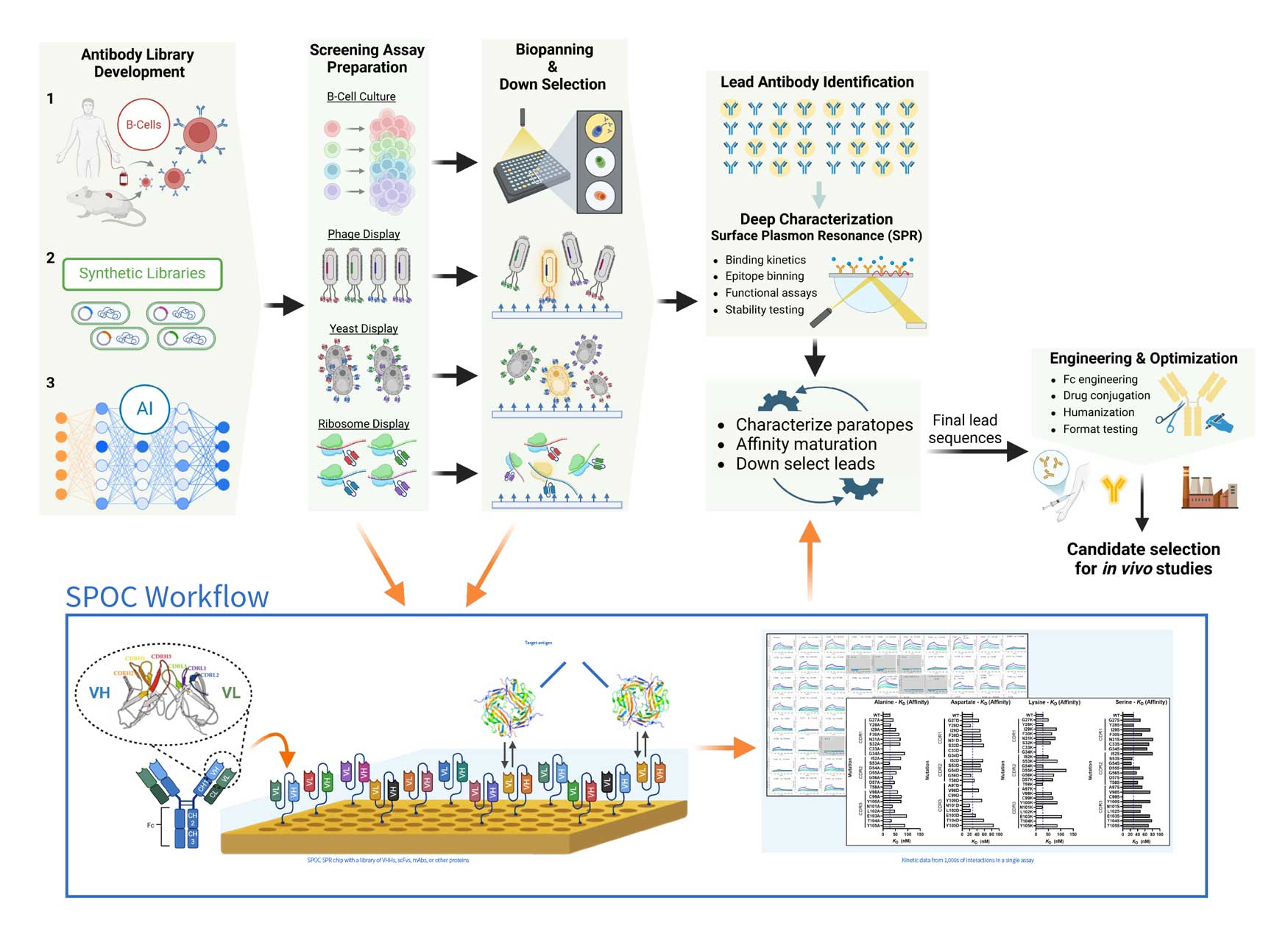
Antibody sequence libraries are sourced from B-cells (naïve or immunized animals, or convalescent patient serum), synthetic cDNA constructs, or generative AI design. For known sequences, display technologies (phage, yeast, ribosome) synthesize millions of sc-antibody variants for panning against target antigens. Binders are then deeply characterized for functional activity and target binding kinetics by SPR, followed by paratope characterization and affinity maturation before humanization, Fc engineering, and in vivo studies. The SPOC workflow (lower panel) takes variable domain sequences directly into cell-free production and capture of sc-antibody libraries on SPR biosensor chips, returning kinetic data for the full library in a single assay to support down-selection and affinity maturation.
The SPOC platform reported in Agu et al. (Communications Biology, 2025) produces up to 2,400 full-length proteins on a single SPR biosensor from a DNA library and outputs real-time kinetic data per spot. This paper extends the platform to the smaller, more folding-sensitive scFv, VHH, and Fab formats.
Construct expression and target binding
Eight constructs were tested as scFvs (against IL-6, HSA, TNFα, p53, HER2, CEA, EGFR, IFNγ) and two as VHHs (against TNFα, HER2). All were designed as C-terminal HaloTag fusions, codon-optimized for E. coli IVTT expression, with VH and VL separated by a (Gly4Ser)3 linker. SDS-PAGE confirmed expression at the expected molecular weight for every construct.
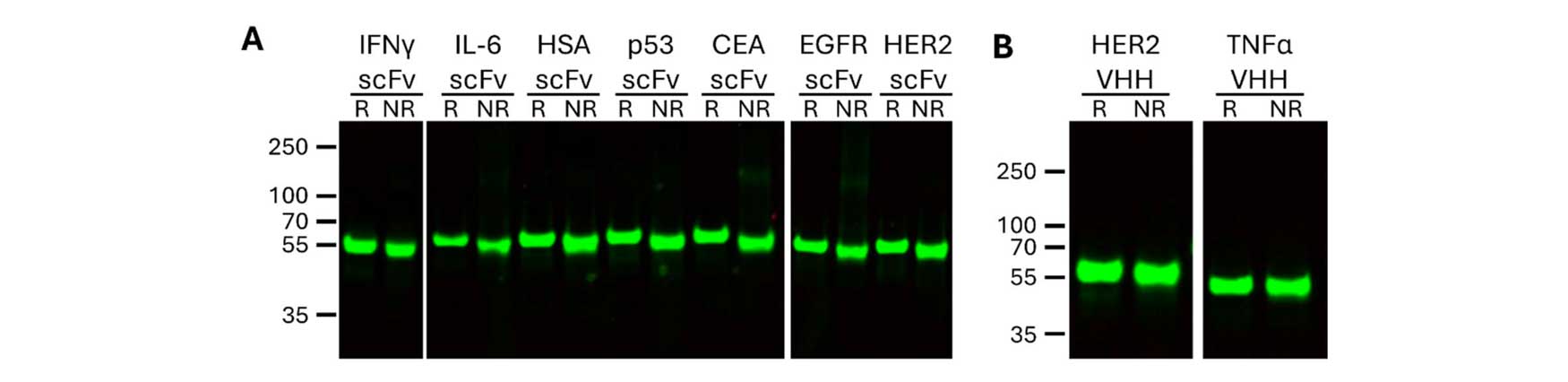
SDS-PAGE of C-terminal HaloTagged scFvs and VHHs expressed in E. coli IVTT lysate. Constructs were covalently labeled with TMR-Halo ligand, then run in reducing (R) and non-reducing (NR) conditions.
On a glass slide fluorescence assay, each scFv and VHH bound its cognate antigen. Cross-reactivity testing with non-cognate antigens returned negligible signal across the panel (Figure 5 in the preprint).
On the SPOC SPR biosensor with antigen titrations, five scFvs (IL-6, HSA, EGFR, HER2/Trastuzumab, CEA) and both VHHs (TNFα, HER2) bound their target antigens at high response levels in a single screen with no SPR or expression optimization. Fabs were assembled on-chip by co-printing VH-HaloTag and VL DNA into the same nanowell. The two chains expressed together, formed disulfide bonds, and bound antigen with the expected specificity.
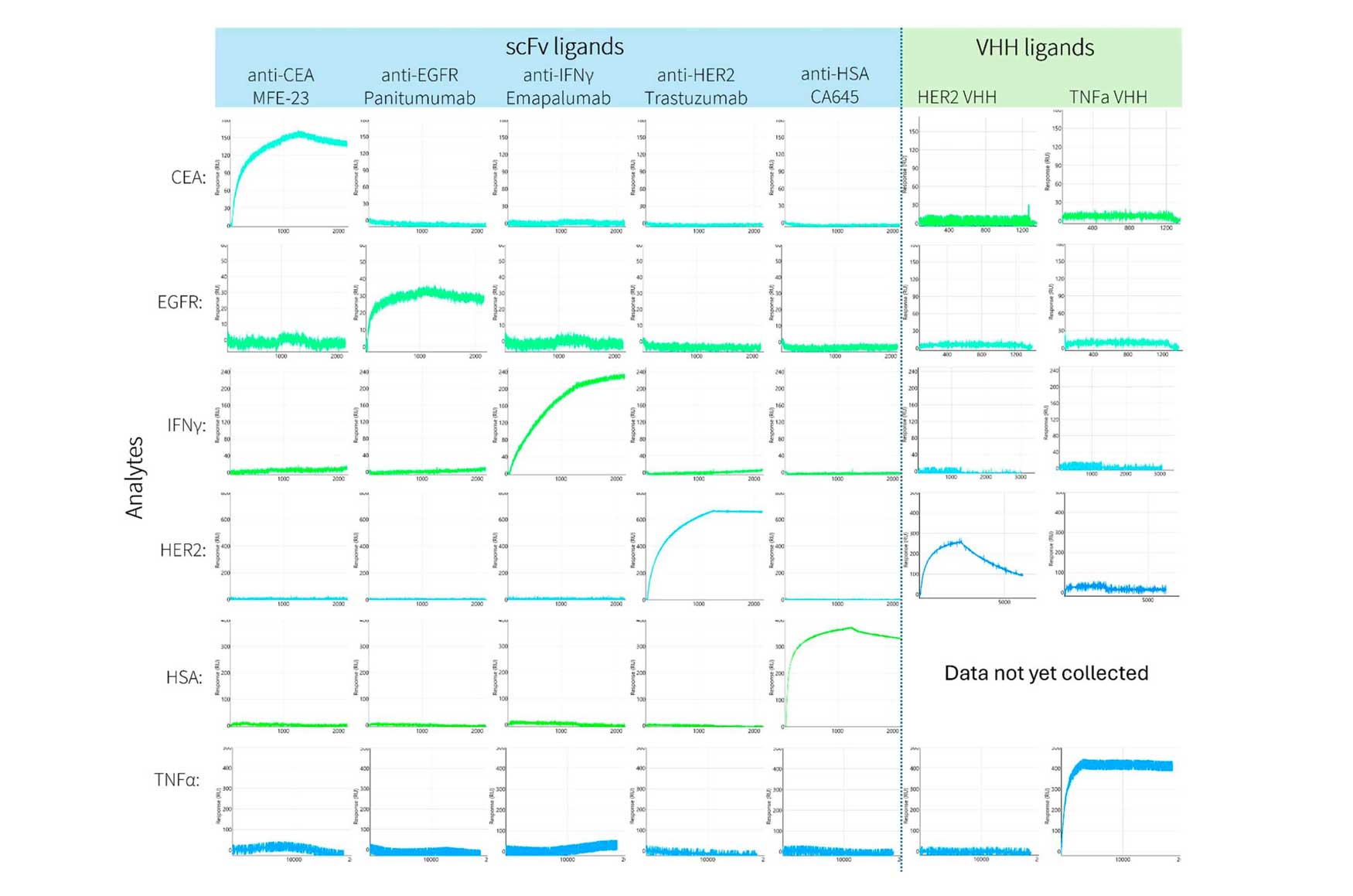
Antigen targets were screened simultaneously against all scFv and VHH ligands on a SPOC SPR biosensor. Binding traces to each cognate sc-antibody are shown. scFv and VHH data were collected in separate SPR runs.
Affinity measurements on three constructs
Three constructs were taken to full kinetic titration:
TNFα VHH: KD = 149 pM (1 hr association, 4 hr dissociation, regenerative conditions). Literature value: 540 pM.
HER2 VHH: KD = 13.5 nM. Literature value: 4 nM.
Trastuzumab scFv: KD = 6.7 nM. FDA-reported KD for full-length Trastuzumab: 5 nM.
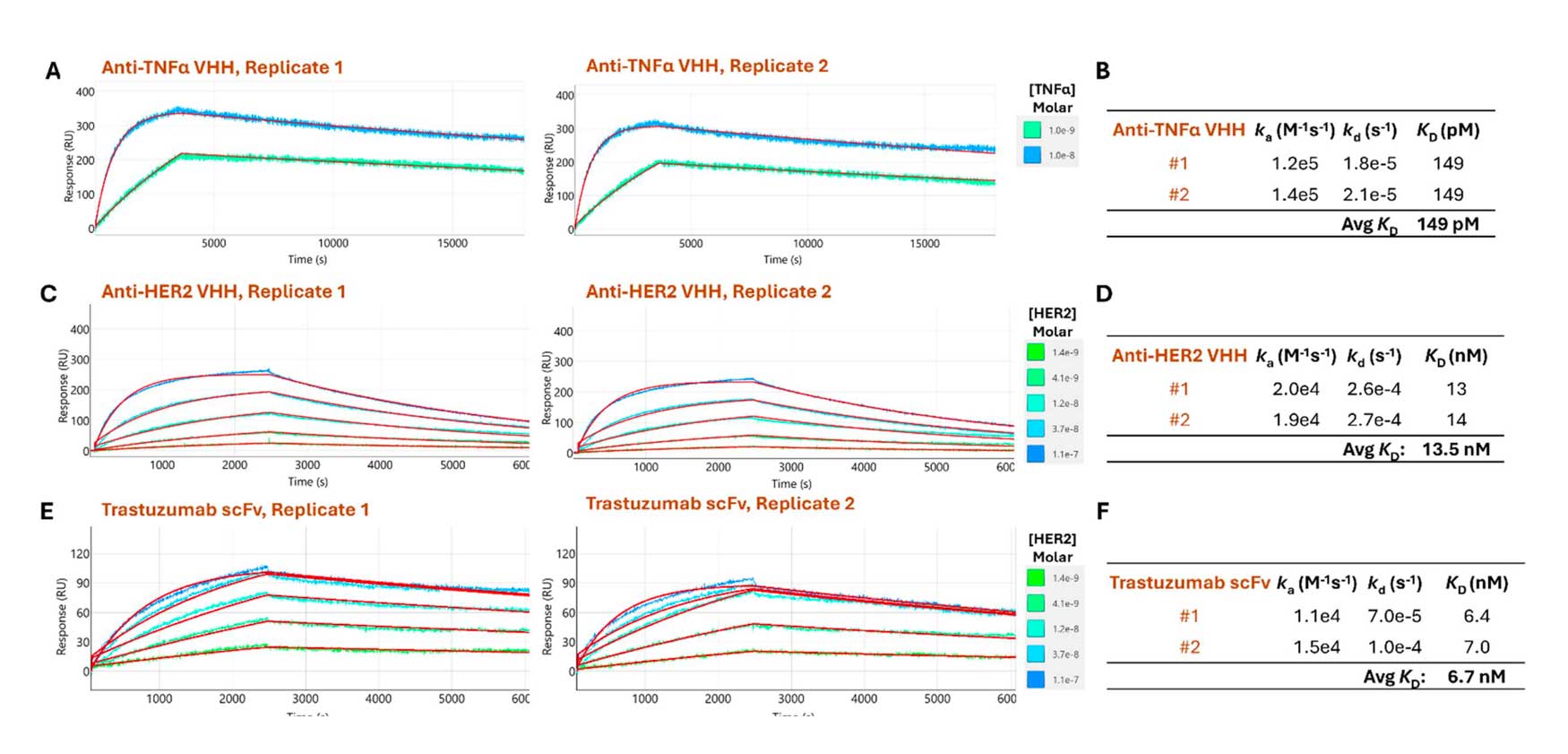
(A, B) Anti-TNFα VHH affinity from a TNFα titration on the SPOC SPR biosensor, run with 4 hr dissociation under regenerative conditions due to the high-affinity interaction. (C, D) Anti-HER2 VHH and (E, F) Trastuzumab scFv affinity from a HER2 ECD titration under regenerative conditions. Kinetic measurements averaged across duplicate spots (1 and 2) for all three constructs.
Epitope binning
Two binning experiments ran on a SPOC biosensor displaying both HER2 VHH and Trastuzumab scFv as ligands, with HER2 ECD pre-binding followed by sandwich antibody injection.
With purified therapeutic antibodies as analytes, Trastuzumab bound the HER2 VHH–HER2 ECD complex (non-overlapping epitopes) but not the Trastuzumab scFv–HER2 ECD complex (identical epitope). Pertuzumab bound both complexes, since its ECD2 epitope does not overlap with the HER2 VHH (ECD1) or Trastuzumab (ECD4) epitopes. Rituximab, the anti-CD20 negative control, bound neither.
The same experiment was repeated with buffer-exchanged crude IVTT lysate as the sandwich analyte, the first demonstration of this on SPOC. IVTT HER2 VHH lysate bound only the Trastuzumab scFv–HER2 ECD complex. IVTT Trastuzumab scFv lysate bound only the HER2 VHH–HER2 ECD complex. Both results match the purified-antibody binning, indicating that crude lysate can substitute for purified analyte in epitope binning workflows.
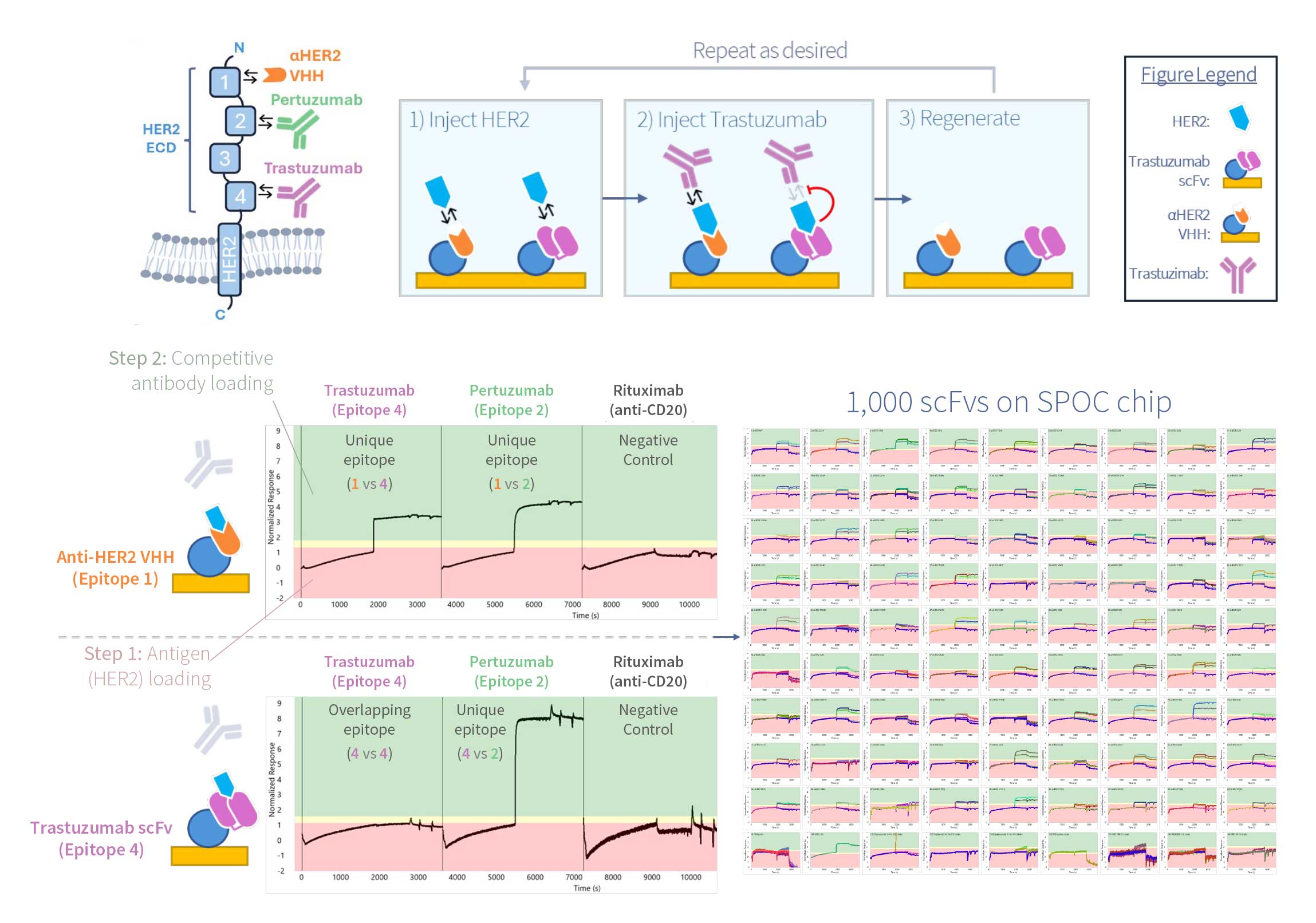
(Top left) HER2 ECD domain map: anti-HER2 VHH binds ECD1, Pertuzumab binds ECD2, Trastuzumab binds ECD4. (Top middle) Binning cycle: inject HER2 ECD, inject sandwich antibody, regenerate, repeat. After HER2 ECD pre-binding to the on-chip ligand, the sandwich antibody binds only when its epitope does not overlap. (Bottom left, top sensorgram) Anti-HER2 VHH (ECD1) as on-chip ligand: Trastuzumab (ECD4) and Pertuzumab (ECD2) both produced sandwich signal (unique epitopes); Rituximab (anti-CD20) negative control did not. (Bottom left, bottom sensorgram) Trastuzumab scFv (ECD4) as on-chip ligand: Pertuzumab (ECD2) produced sandwich signal (unique epitope); Trastuzumab IgG (ECD4, overlapping epitope) and Rituximab did not. (Right) The same binning workflow extended across 1,000 scFvs on a single SPOC chip.
HER2 VHH paratope scan
The largest experiment in the paper is a single amino acid mutational scan of the three CDRs of HER2 VHH (2Rs15d). Each residue in CDR1 (positions 27–34), CDR2 (positions 52–58), and CDR3 (positions 97–105) was substituted to alanine, aspartate, lysine, and serine, producing 92 variants. All variants were captured on a single SPOC biosensor and screened against a HER2 ECD titration (1.4 to 110 nM).
WT KD measured at 13.7 nM ± 0.745 nM across six replicate spots.
Three residues were intolerant to substitution. C33, C99, and I52 mutations to any of the four amino acids ablated binding below the detection limit. The published crystal structure does not predict a disulfide between C33 and C99, but the loss-of-binding pattern is consistent with one.
Two residues tolerated all substitutions. Y28 and T58 mutations gave WT-comparable KD across alanine, aspartate, lysine, and serine.
Three substitutions improved affinity ~4-fold over WT:
L102A: KD = 3.1 nM ± 0.85 nM
I29D: KD = 3.1 nM ± 0.50 nM
L102S: KD = 3.6 nM ± 0.64 nM
These high-affinity variants showed non-canonical kinetics: modest association, steep early dissociation, then a stable plateau. The pattern is consistent with a heterogeneous binding mode where one population is highly stable.
The weakest mutant identified was S32K at KD = 31 nM ± 2.8 nM, more than 2-fold weaker than WT. Across the full panel, lysine substitutions were generally detrimental, and aspartate substitutions ablated or significantly reduced binding in more than one third of the mutated positions. Serine and aspartate together accounted for nearly all of the affinity improvements.
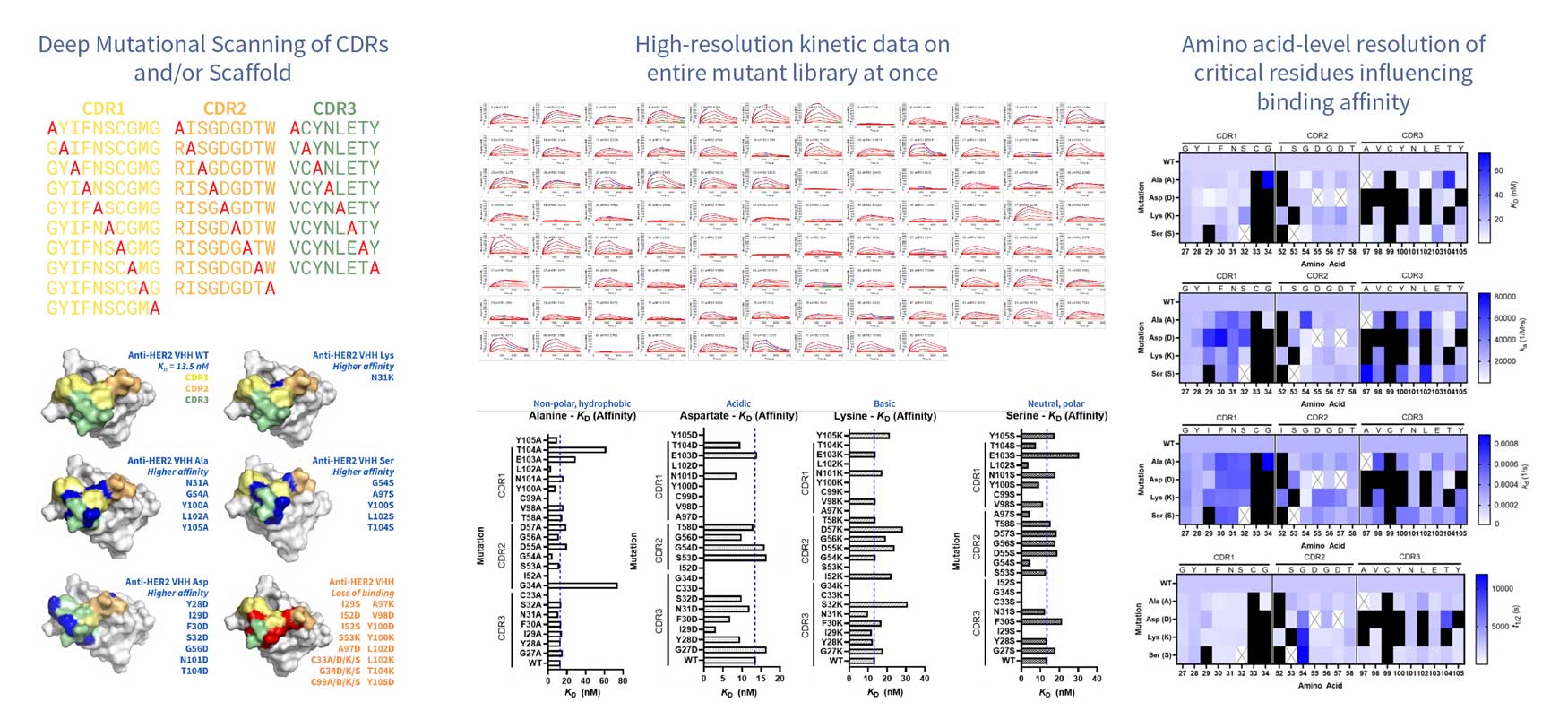
(Left) Mutational scan design: each residue in CDR1, CDR2, and CDR3 of the anti-HER2 VHH (2Rs15d) was substituted to alanine, aspartate, lysine, and serine, producing 92 variants. Surface representations show CDR positions on the WT structure, residues yielding higher affinity for each substitution class (blue), and residues where any substitution ablated binding (red). (Middle, top) HER2 ECD titration sensorgrams (1.4 to 110 nM) for all 92 variants, captured on a single SPOC biosensor. Red lines are 1:1 model fits. (Middle, bottom) KD per variant by substitution class (alanine, aspartate, lysine, serine), grouped by CDR. WT KD = 13.7 nM ± 0.745 nM (dashed line). Missing bars indicate no binding above detection. (Right) Heat maps of KD, ka, kd, and t1/2 across all 92 variants. White boxes with X are WT identity (not produced); black boxes indicate no binding.
Loading independence
To verify that the kinetic measurements did not depend on capture density, WT HER2 VHH was expressed from DNA printed at six concentrations: 11, 25, 33, 50, 75, and 100 ng/µL. KD values came in at 14, 15, 15, 17, 15, and 18 nM (mean 16 nM ± 1.4 nM). The signal magnitude scaled with DNA concentration. The affinity did not.
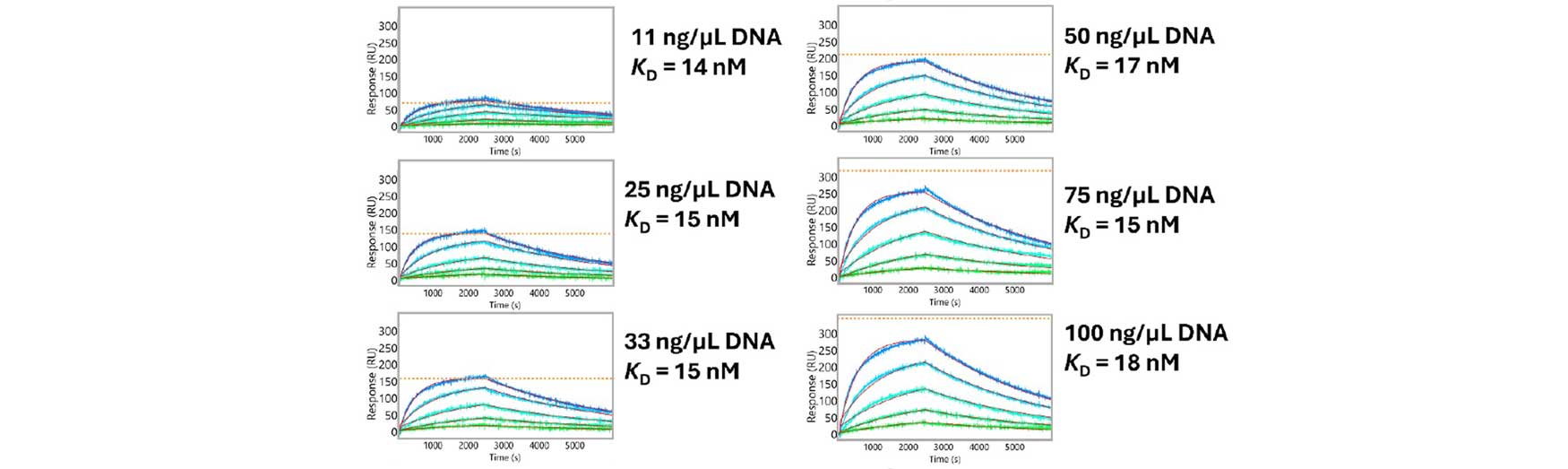
HER2 ECD titration sensorgrams at each DNA concentration. Red lines are 1:1 model fits. Orange dashed line marks the VHH loading level (anti-HaloTag capture signal).
Read the preprint: https://doi.org/10.1101/2025.01.11.632576
